Across the latest stocking endeavor, the tank reached five Thai micro spider crabs, five rainbow emperor tetras, six Sanke koi swordtails, one red bristlenose shortfin pleco, six gold laser Corydoras, six Amano shrimp, three bamboo shrimp, and two of each of five snail varieties.
As an Amazon Associate, Glass Garden Fins earns from qualifying purchases. Product links are selected for relevance; purchases made through them may earn the site a commission at no extra cost to you.
The full roll call
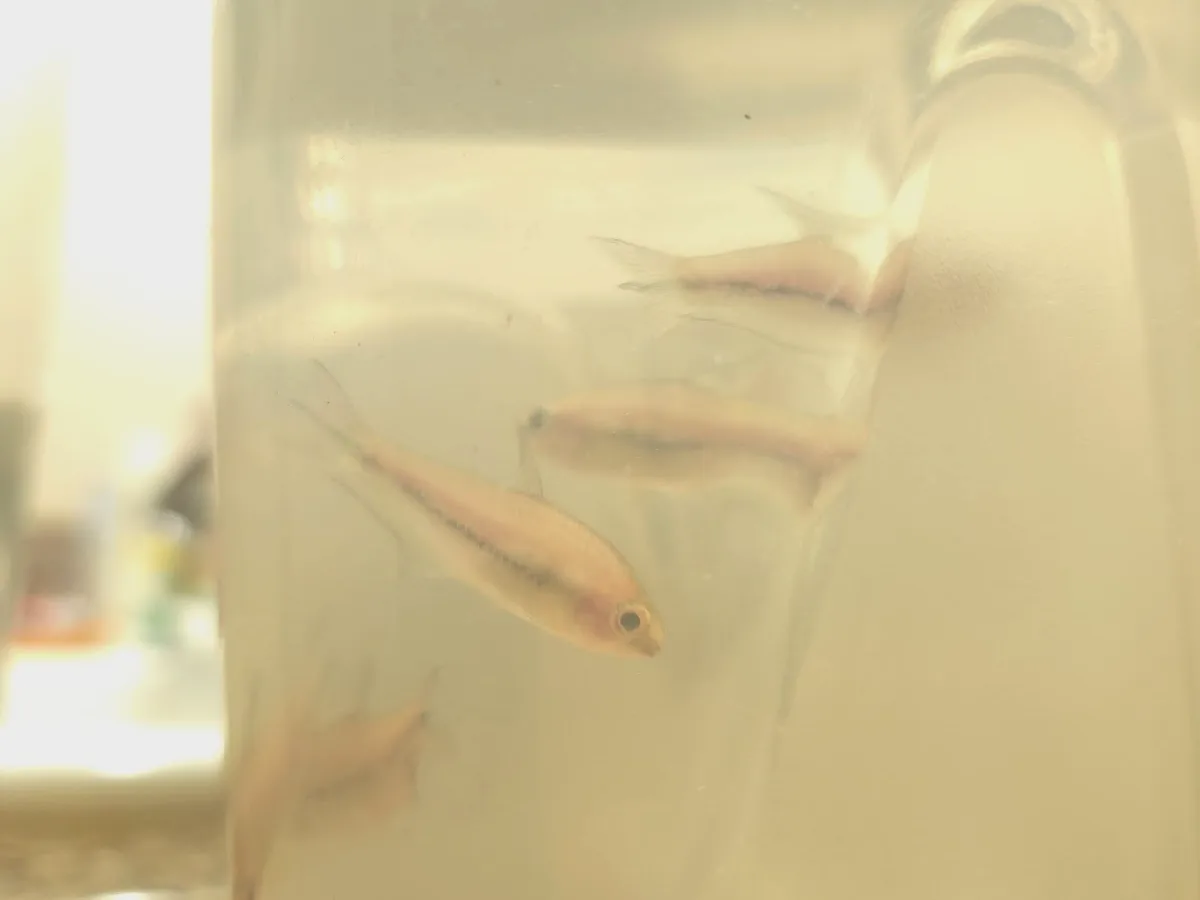
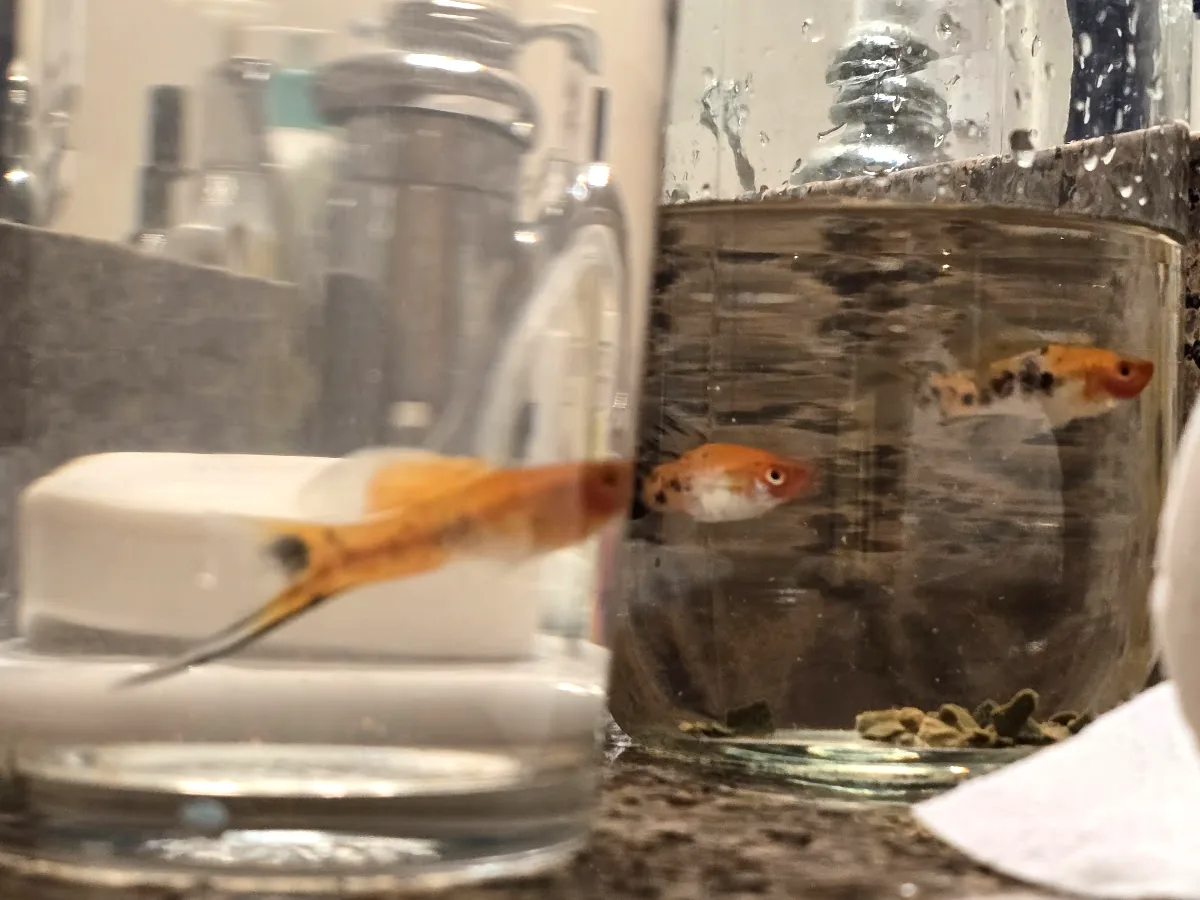
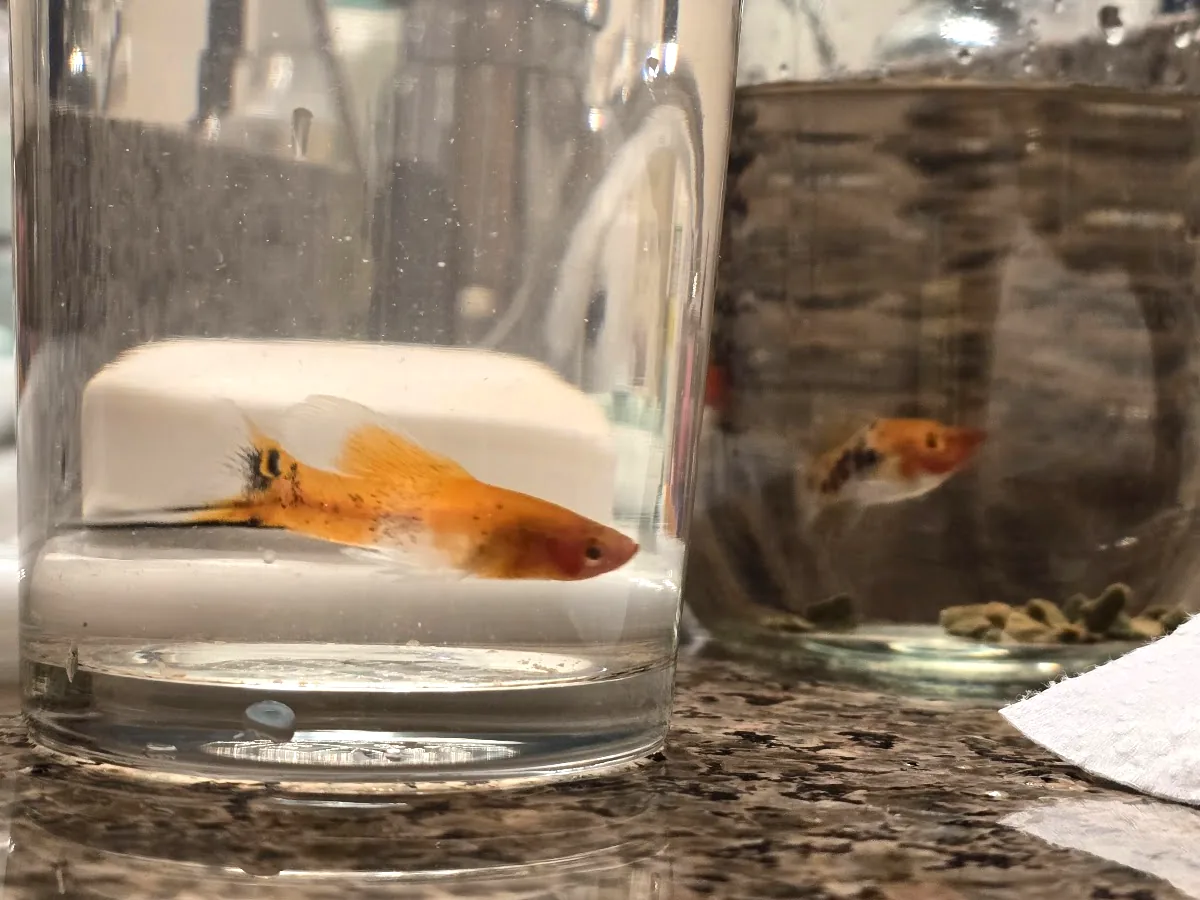
The fish are the most visible part of the change: five rainbow emperor tetras, six Sanke koi swordtails, one red bristlenose shortfin pleco, and six gold laser Corydoras. Together they add movement from the open water down to the substrate and hardscape.
Closer to the hardscape are five Thai micro spider crabs, six Amano shrimp, and three bamboo shrimp. The crabs are tiny enough that disappearance is expected; the useful question is not whether I can see all five at once, but whether the tank gives them enough sheltered surfaces and whether food reaches the places they occupy. Bamboo shrimp are a different kind of challenge. They are filter feeders, so a mature tank and useful current matter more than simply dropping extra food onto the substrate.
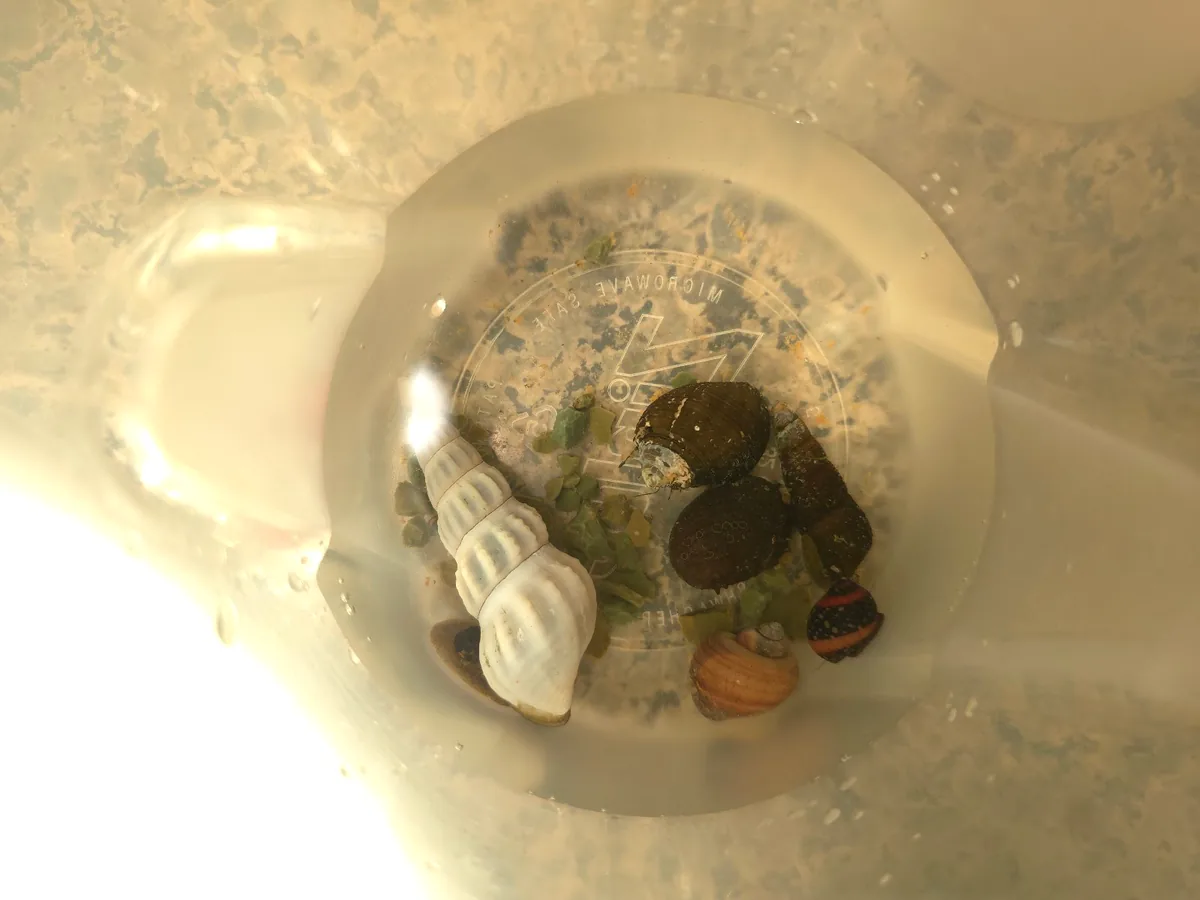
The snail group is deliberately varied: two yellow Poso rabbit snails, two King Koopa snails, two magenta apple snails, two red racer snails, and two white Hercules snails. Each arrives with different habits, appetite, and adult size, which makes the actual species list more useful than treating them as one generic cleanup crew.
A stocking day is not a finish line
This is a meaningful jump in bioload for a 70-litre system, so I am treating arrival as the start of a monitoring period rather than proof that the stocking plan is complete. The filter and plants have to respond to the animals that are actually here now, not the plan that existed on paper.
For the first week, the priorities are simple: keep feeding restrained, test ammonia and nitrite frequently, watch temperature and surface movement, and look for individuals that are being excluded from food or shelter. A clear tank can still have a chemistry problem, and an active fish can still be making life difficult for a quieter tankmate.
What I am watching
With six swordtails, the number alone does not guarantee peace. I am watching whether attention is spread out or whether one fish is being chased constantly. The emperor tetras get the same kind of scrutiny: schooling together is expected; one fish hanging back, clamping its fins, or missing meals is information.
At the bottom, the six gold laser Corydoras should forage as a social group rather than remain isolated, while the red bristlenose shortfin pleco needs reliable access to wood, shelter, and food after the faster fish have eaten.
The smallest animals need observation on their terms. The Thai micro crabs may spend most of their time out of sight, so food placement and calm hiding areas matter. The bamboo shrimp need a perch in moving water where they can fan suspended particles. If they spend all day scraping the substrate instead, that can be a sign that the water column is not delivering enough food.
With the snails, I am watching shell condition, activity, and where each species chooses to spend its time. The apple and rabbit-type snails add more waste than their slow pace suggests, while the red racer is more likely to patrol hard surfaces. Any unexplained trip above the waterline is worth checking against water quality before dismissing it as personality.
The plan from here
No new livestock for a while. The useful work now is boring work: small feedings, consistent lighting, stable temperature, regular parameter checks, and enough patience to learn the new normal before changing anything else.
If ammonia or nitrite appears, if oxygenation slips, or if aggression becomes persistent, the response has to be immediate and practical — water changes, more surface movement, reduced feeding, or separating animals when necessary. The goal is not to make every addition fit the original plan. It is to keep the animals already here healthy, even if that means the plan changes.
A full tank is easy to admire on arrival day. A stable tank is something the next several weeks have to prove.